Something is changing in how Indian families make education decisions. For decades, the singular goal of most middle-class families was IIT — or, failing that, a state engineering college with a recognizable name. The entrance exam was everything. The college was the career. That logic is fraying in 2026, and the fractures are becoming visible in the very data the education system produces.
Consider what is happening right now. JoSAA counselling for IIT seats opens June 2, the day after JEE Advanced results. But the same week, admissions to WILP programmes and vocational courses at universities like MIT University Sikkim — which embed mandatory industry training into their degree structure — are receiving growing inquiry numbers. Skill India courses, BVoc programmes, and data-analytics-linked degrees are filling up before traditional liberal arts seats in several state universities.

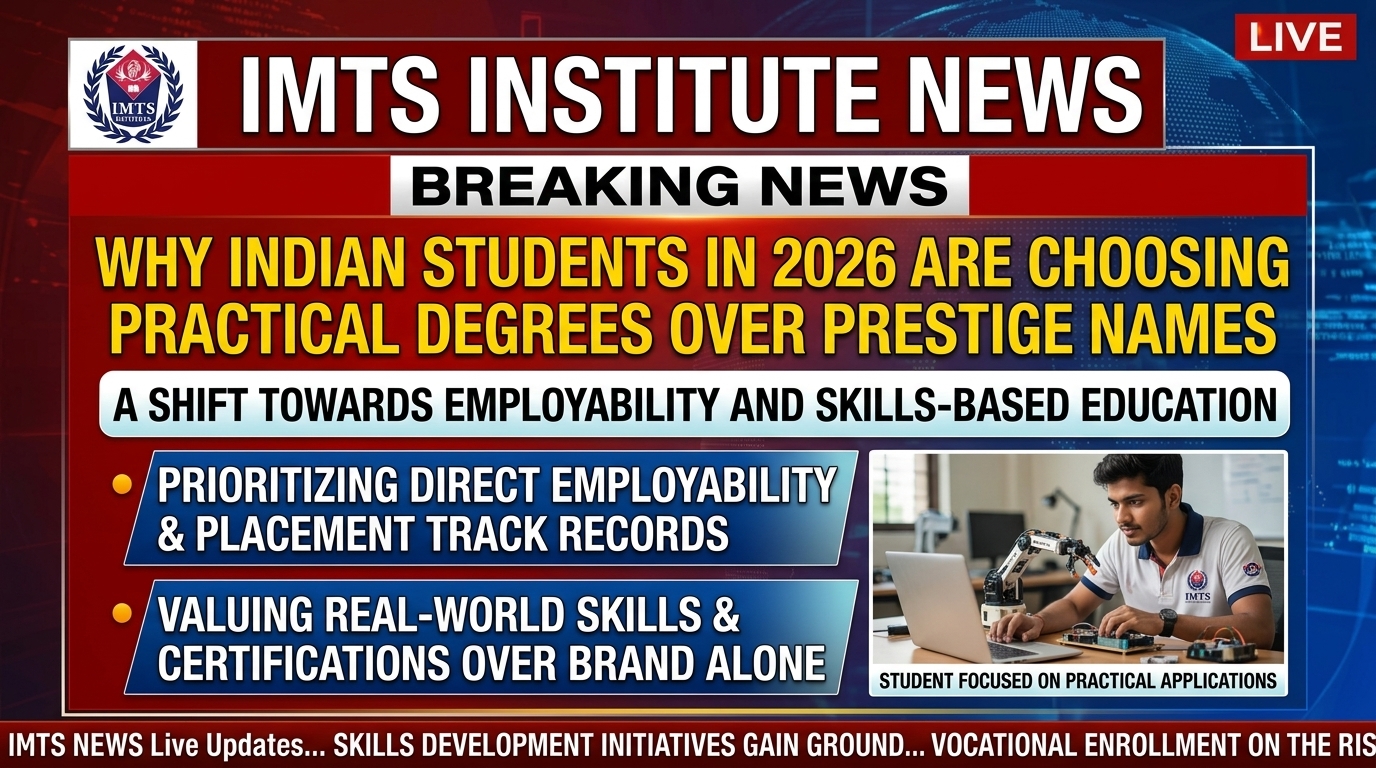
The reasons are not hard to find. The employment market has changed. Companies in IT, analytics, fintech, healthcare, and manufacturing are increasingly explicit about what they want: graduates who can work from week one. A student with a BVoc in Data Analytics who has completed two semesters of structured industry training at a NAAC-eligible institution is, in the eyes of many hiring managers, a more immediately deployable candidate than a generalist graduate from a recognized university whose only industry exposure was a four-week summer internship.
The NEP 2020 recognised this direction early. The multiple entry and exit points in degree programmes, the push for credit transfer between vocational and academic streams, and the emphasis on internship-embedded curriculum were all designed to make Indian higher education more employment-linked. The implementation is uneven, but the direction is set.
The second trend worth watching is geographic diversification. Students and families are less tied to their state boards and state universities than they were ten years ago. A student from Bihar is willing to consider a WILP programme in Sikkim if the degree is UGC-recognised and the industry connection is verifiable. A student from Karnataka is seriously comparing a fee structure at a new private university against a government college seat where practical training is an afterthought.
The third shift is in what parents ask at counselling sessions. Increasingly, the first question is not about the college’s ranking or age — it is about placements and salary data. The second question is often about flexibility can the student exit with a diploma if things do not go as planned? These are the right questions, and they reflect a generation of families that has watched older siblings or cousins graduate with impressive-sounding degrees but struggle to find relevant employment.
India’s higher education system is producing approximately 10 million graduates annually. The economy can absorb that scale only if graduates arrive with skills that match market needs. The signs in May 2026 suggest that the market, the government, and a growing number of students already understand this. The institutions that adapt to this reality fastest will define Indian higher education for the next decade.