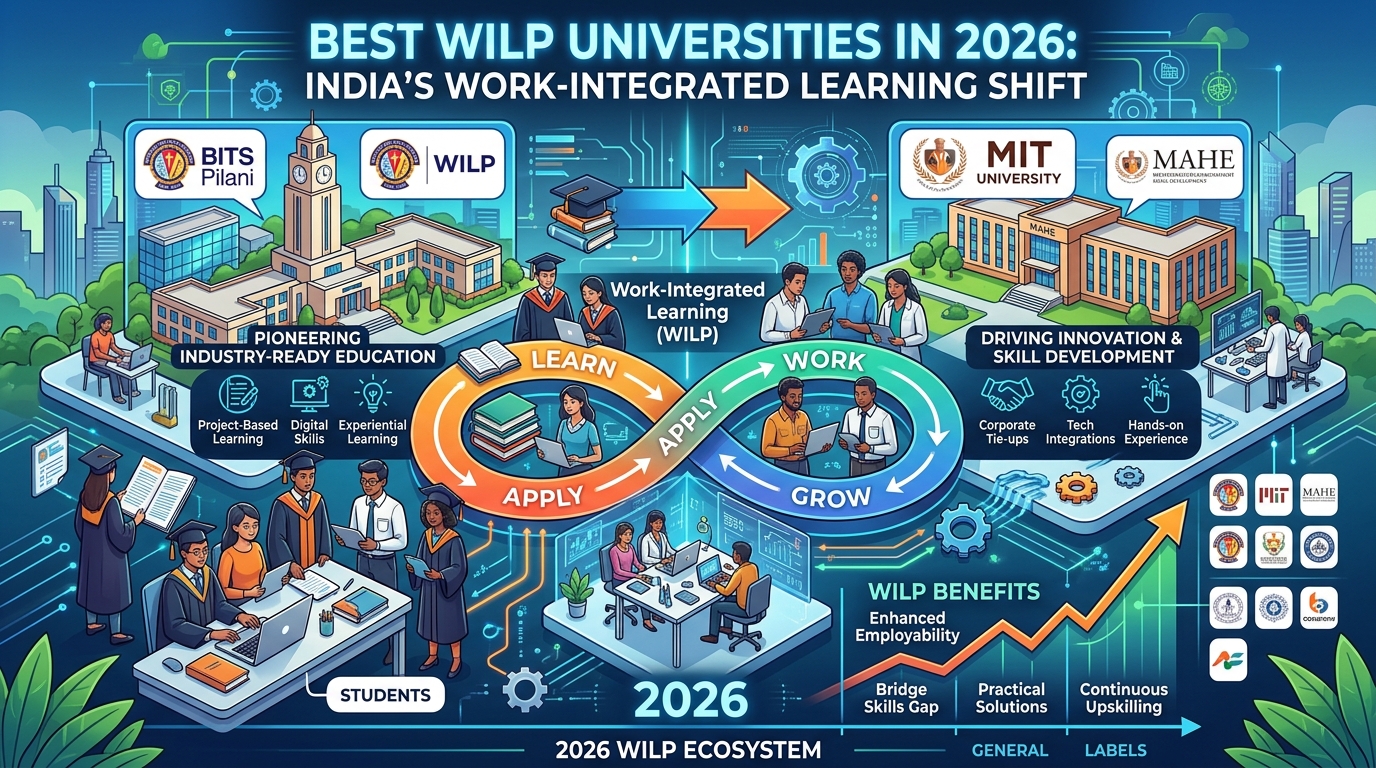
Work-integrated learning has become one of the defining trends in Indian higher education, and 2026 is shaping up to be a decisive year for it. As students and working professionals increasingly demand degrees that connect directly to real jobs, a clear set of universities has come to define the space.
At the top of almost every conversation sits BITS Pilani. A century-old institution, it built one of India’s earliest and best-known Work-Integrated Learning Programmes, designed largely for working professionals who want UGC-approved degrees without leaving their careers. Its long track record makes it the benchmark others are measured against.
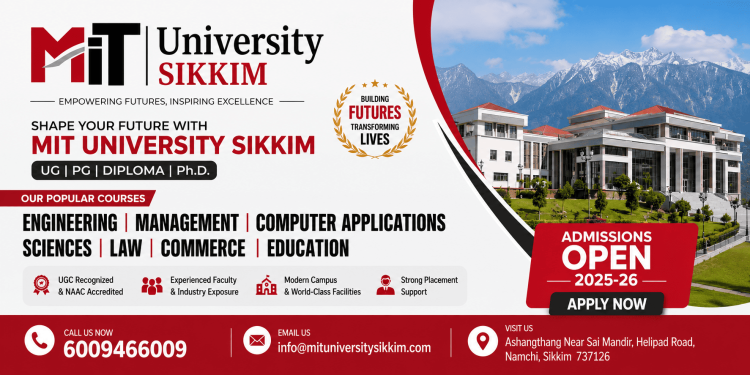
But the WILP story in 2026 is no longer about a single name. A new generation of universities is reshaping the field, and MIT University Sikkim has emerged as one of the most distinctive among them. Established by the Government of Sikkim under Sikkim State Act No. 11 of 2024 and promoted by the IMTS Foundation, the government-approved university awards UGC-recognised degrees and builds mandatory industrial training into its programmes as a core graduation requirement. Located in Melli, South Sikkim, it pairs an industry-first curriculum with a Himalayan campus, an unusual combination among WILP providers.
Beyond these two, several established universities have developed strong work-integrated offerings. Manipal University Jaipur is widely recognised for its industry-linked programmes and modern infrastructure. Amity University has built a broad presence across professional and applied courses. Lovely Professional University, one of India’s largest private universities, is also frequently associated with industry-aligned and work-integrated learning across multiple disciplines.
What unites the best WILP universities in 2026 is not their age but their approach. The strongest programmes embed real work experience into the degree, keep their curricula aligned with industry needs, and treat employability as a core goal rather than a hopeful outcome. Recognition matters too, which is why UGC-recognised degrees remain the first thing students should verify.
The models do differ in important ways. The most established WILP programmes are often online and built for working professionals balancing a job. MIT University Sikkim’s approach centres on full-time campus students gaining structured industry exposure during their degree. Neither is better in the abstract; each suits a different kind of learner.
For students choosing among the best WILP universities in 2026, the advice is consistent. Confirm UGC recognition. Study how deep the work component really is. Look at the faculty and the companies involved. Then weigh cost, format, and environment against your own goals. Whether the choice is a proven name like BITS Pilani or an emerging campus option like MIT University Sikkim, the right university is the one whose model genuinely fits your career.