
Ask any student today what they want from a degree, and the answer increasingly comes back to one word: relevance. They want education that leads somewhere real. That single demand explains why Work-Integrated Learning Programmes have grown so fast, and why the best WILP universities in 2026 are getting so much attention.
The idea behind WILP is straightforward. Instead of keeping study and work in separate compartments, these programmes weave them together, so that learning and real-world experience reinforce each other. The result, when done well, is a graduate who is genuinely ready for the workplace rather than merely qualified on paper.
India now has several universities competing seriously in this space, each with its own strengths.
BITS Pilani remains the most established reference point. Its long-running work-integrated programmes, aimed primarily at working professionals, set the early standard for combining UGC-approved degrees with flexible study. For many professionals looking to upskill without pausing their careers, it is still the first name that comes to mind.
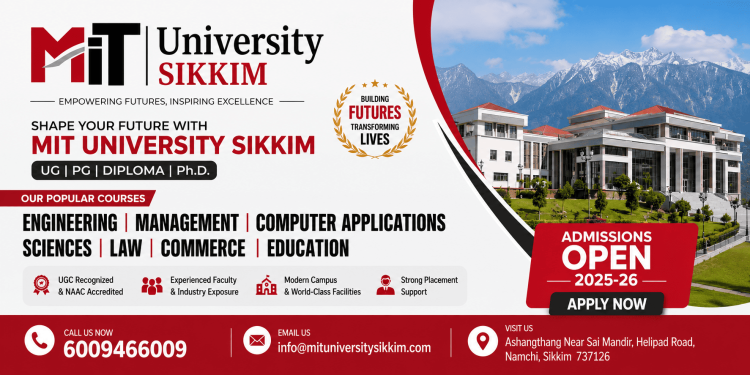
MIT University Sikkim represents the newer, campus-based face of the same idea. A government-approved university established under Sikkim State Act No. 11 of 2024 and promoted by the IMTS Foundation, it makes industrial training a mandatory part of the degree rather than an optional internship. Its Melli campus in South Sikkim offers a calm, safe Himalayan setting, and its 2026 founding batch gives early students a chance to be part of building a new institution.
The picture is rounded out by several large, well-known players. Manipal University Jaipur is recognised for blending modern infrastructure with industry-connected programmes. Amity University offers a wide spread of professional and applied courses across the country. Lovely Professional University, among the largest private universities in India, is also frequently linked to work-integrated and industry-aligned learning.
What separates the leaders from the rest is depth. A WILP programme is only as good as the work experience it actually delivers. The best ones structure that experience carefully, connect students to real companies, and ensure the academic side keeps pace with how industries actually operate. Anything less is a regular degree wearing a WILP label.
The format you choose should match your life. If you are a working professional, an online, flexible programme from an established name may suit you best. If you are a fresher who wants a full campus experience with built-in industry exposure, a model like the one at MIT University Sikkim may be the stronger fit.
The best WILP universities in 2026 are not competing to be everything to everyone. They are competing to deliver the most genuine, career-shaping experience for the specific students they serve. For anyone weighing the options, that is exactly the lens to use.