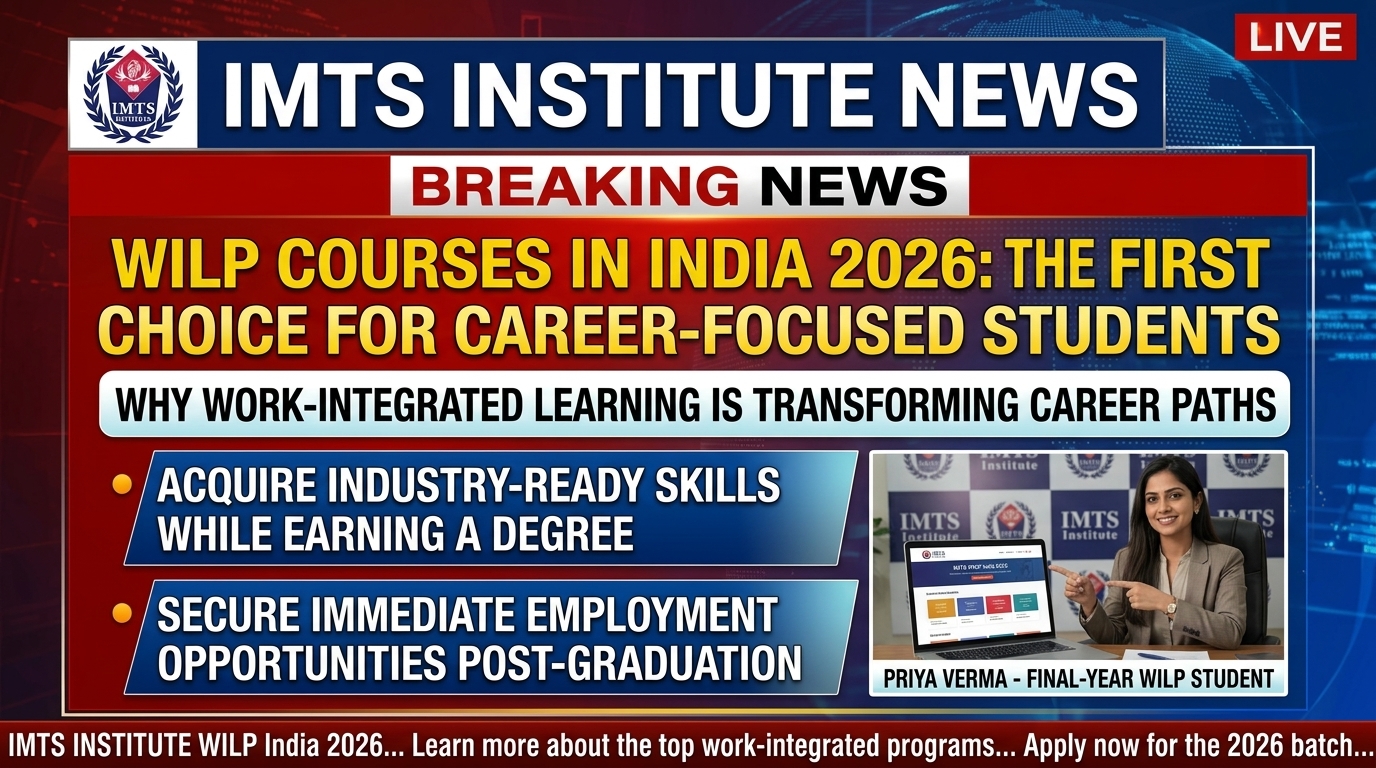
Thousands of students across India are rethinking traditional degree programmes and turning towards a smarter education model — Work Integrated Learning Programmes, commonly known as WILP. In 2026, WILP has moved from being a niche option to one of the most discussed pathways in Indian higher education, backed by the National Education Policy 2020 and supported by the University Grants Commission (UGC).
The idea behind WILP is simple and powerful. Instead of spending three to four years only in a classroom before entering the workforce, students in WILP programmes combine formal academic learning with real, structured workplace experience at the same time. By the time they graduate, they are not just degree holders — they are professionals who have already tested their skills in the real world.

What Makes WILP Different from Regular Degrees
Traditional degrees focus almost entirely on theory. WILP flips that balance. Most quality WILP programmes in India are structured around at least 60 percent practical or vocational training and up to 40 percent general academic education. This is not a token internship added at the end. The work component is built into the degree structure from the very first semester.
Key differences that make WILP stand out in 2026:
- Industry exposure is compulsory, not optional
- Live projects and workplace assignments form part of the formal assessment
- Curriculum is co-designed with industry experts to match current market demands
- Students develop soft skills, communication, and professional behaviour alongside technical knowledge
- Graduates enter the job market with both a UGC-recognised degree and verified work experience
Who Should Consider WILP
WILP is suitable for a wide range of students. Fresh Class 12 pass-outs who want a degree that directly prepares them for employment, working professionals looking to upgrade their qualifications without leaving their job, and diploma holders who want to convert their technical training into a formal degree — all benefit from the WILP model.
The programmes are available at multiple levels, including Diploma in Vocational Studies (one year), B.Tech or BBA with WILP components (three to four years), and postgraduate M.Tech or MBA with integrated industry training. Several universities also offer WILP at the certificate level for short-duration skill building.
Why Companies Prefer WILP Graduates
India’s hiring landscape is changing fast. According to industry reports cited by the UGC, companies in IT, manufacturing, healthcare, analytics, and logistics increasingly prefer candidates who have real work exposure over those with purely academic backgrounds. A WILP graduate who has already worked on live projects, met deadlines in a professional environment, and learned to work in teams is seen as immediately deployable — which matters enormously to employers who cannot afford long onboarding periods.
The Skill India initiative and the NEP 2020 framework have provided strong institutional backing for WILP expansion. Several universities across India — both established and newer institutions — are now building WILP frameworks into their degree structures to align with this national direction.
Choosing the Right WILP University
With more institutions entering this space, students must verify a few essential things before choosing a WILP programme:
- Confirm the university holds UGC recognition under Section 2(f)
- Check that the degree is valid for government employment, postgraduate admissions, and private sector jobs
- Examine how deeply the work component is embedded — a real WILP programme runs industry training across semesters, not just in the final year
- Look at the sectors the university connects students with — AI, Data Science, IT, healthcare, business analytics, and cloud computing are high-demand areas in 2026
- Ask about placement support, mentorship, and whether guest faculty include active industry professionals
WILP is not a shortcut. It is a smarter route. Students who choose the right programme and commit fully to both the academic and industry components come out with a significant career advantage over traditional graduates.