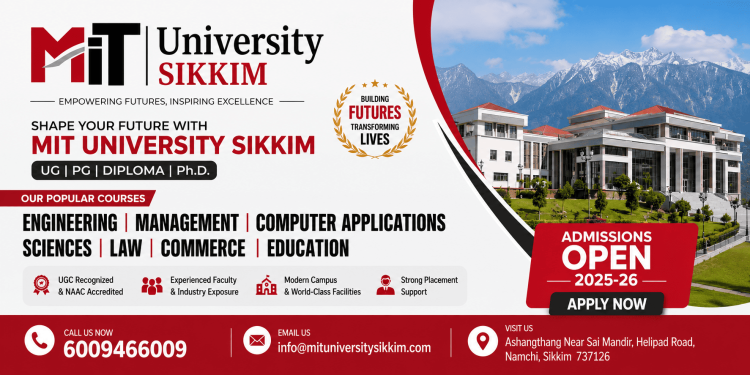
A university in the northeastern Himalayan region is drawing increasing attention from students across India in 2026 MIT University Sikkim, located in South Sikkim, which is building one of the more distinctive education models among India’s newer higher education institutions by placing industry integration, practical training, and NEP 2020 alignment at the centre of its academic design.
MIT University Sikkim was established under Sikkim State Act No. 11 of 2024 by the Government of Sikkim and is promoted by the IMTS Foundation. The university holds recognition under Section 2(f) of the UGC Act, which means its degrees are recognised by the University Grants Commission and are valid for government employment, postgraduate admissions, and private sector jobs across India. The university is located at Melli, South Sikkim, in the foothills of the Eastern Himalayas.
MIT SIKKIM Admissions Open for June 2026 Cycle
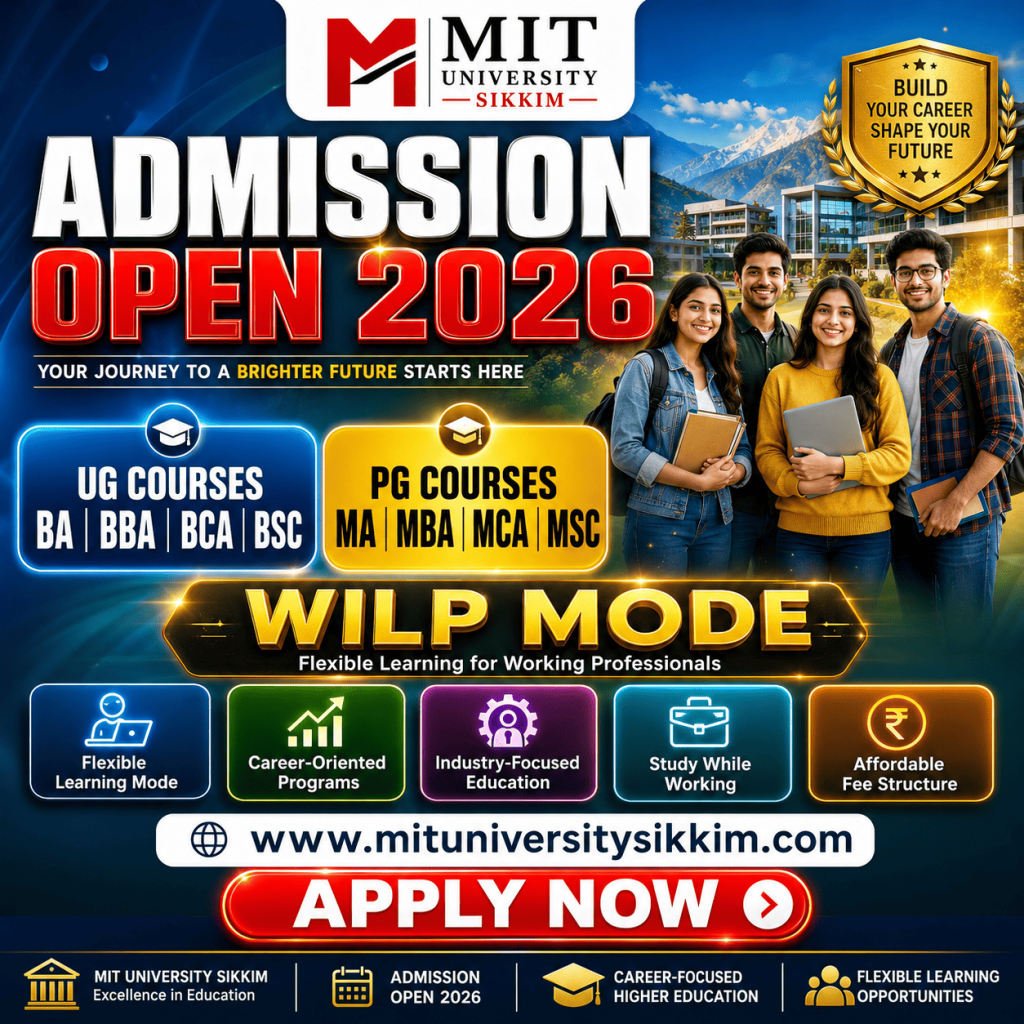
The university has officially opened admissions for the June 2026 examination cycle. Students can apply online through the official website at mituniversitysikkim.com. Admissions are open for the following categories of programmes:
Undergraduate (UG) Programmes:
- B.A. (Arts and Humanities)
- BBA (Business Administration)
- BCA (Computer Applications)
- B.Com (Commerce)
- B.Tech (Engineering — selected disciplines)
- BFA (Fine Arts)
- B.Voc (Vocational Studies in multiple specialisations)
Postgraduate (PG) Programmes:
- MBA (Business Administration)
- MCA (Computer Applications)
- M.Com (Commerce)
- M.Tech (Technology)
- MA (various disciplines)
- M.Voc (Master of Vocational Studies)
Diploma and Certificate Programmes:
- Diploma in Digital Marketing
- Diploma in Artificial Intelligence and GPT Technology
- Diploma in Cybersecurity
- Short-term vocational certificates in emerging technology areas
What Makes MIT University Sikkim Different
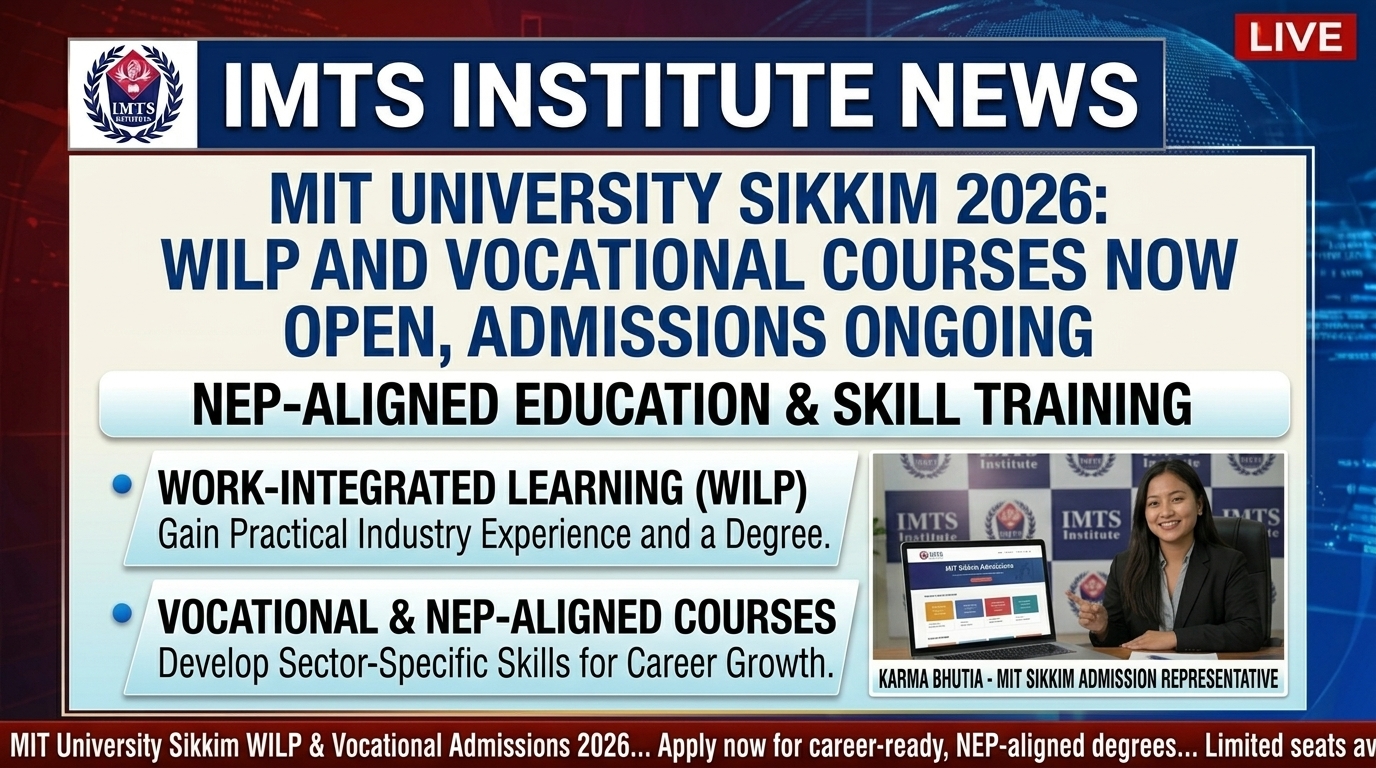
The university is specifically focusing on the Work Integrated Learning Programme (WILP) model and Vocational Education as its academic differentiators. Unlike universities that treat internships as optional add-ons, MIT University Sikkim has made industry training a core graduation requirement — meaning students cannot complete their degree without completing structured practical work in their chosen field.
The key features of the MIT University Sikkim education model:
- NEP 2020-aligned curriculum across all programmes
- AI-integrated classrooms with technology-focused learning environments
- Guest faculty from the US and UK contributing to select programmes
- Mandatory workshops, live projects, and internships embedded into degree structure
- Focus on emerging sectors — Artificial Intelligence, Data Science, Cyber Security, Cloud Computing, and Business Analytics
- Affordable fee structure ranging from approximately Rs 20,000 to Rs 90,000 per year depending on the programme
- Scholarship opportunities for merit-based and financially deserving students
- No entrance examination required for most programmes — admission is based on academic merit
Eligibility for Admission
- UG programmes: Class 12 pass from any recognised board with minimum 50 percent marks
- PG programmes: Bachelor’s degree from a UGC-recognised university in a relevant discipline
- B.Voc / M.Voc: Class 12 pass (B.Voc) or any graduation degree (M.Voc) with 50 percent marks
- PhD programmes: Postgraduate degree with minimum 55 percent marks
- Reserved category relaxations as per UGC and government norms
Why Students Are Choosing MIT University Sikkim
Education experts tracking student inquiry patterns in 2026 note a clear shift in what students are looking for. Rather than just looking at university brand or age, students are now comparing institutions based on employability outcomes, quality of internships, curriculum relevance, and industry connections. MIT University Sikkim is positioning itself in this space by offering a campus-based WILP model — where students physically attend classes and practical sessions at the Himalayan campus while also engaging with industry through structured training components. This is a different model from purely online WILP providers and appeals to students who want the social and developmental experience of campus life alongside the practical benefits of industry exposure.