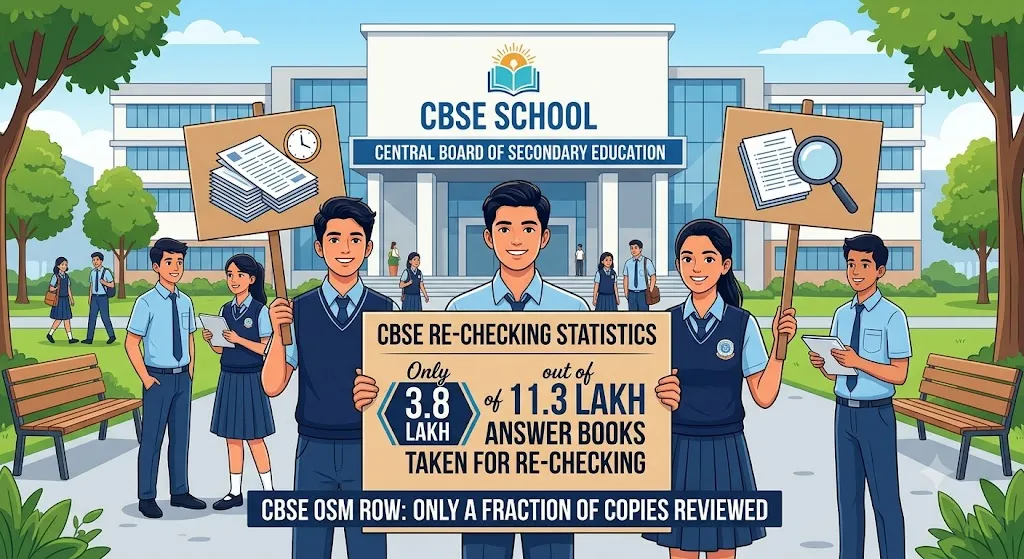
The CBSE OSM Row has gained attention after figures revealed that only 3.8 lakh answer books were submitted for re-checking out of the 11.3 lakh answer books accessed by students through the Online Scanned Marksheets (OSM) system. The data has sparked fresh debate over the effectiveness and transparency of the Central Board of Secondary Education’s post-result verification mechanism.
According to information related to the CBSE OSM Row, more than 11.3 lakh scanned answer sheets were downloaded by students following the declaration of Class 10 and Class 12 board results. However, only around 3.8 lakh answer books eventually proceeded to the re-checking stage, indicating that a majority of students were satisfied with the evaluation after reviewing their copies.

What Is the CBSE OSM Row?
The CBSE OSM Row revolves around the board’s revised post-result process, under which students first obtain photocopies of their evaluated answer sheets before applying for verification or re-evaluation. Critics have questioned whether the process is time-consuming and whether students receive adequate time to examine their answer books before deciding on re-checking.
The board, however, maintains that the system provides greater transparency and allows candidates to make informed decisions regarding re-evaluation.
Petitioner’s Arguments at a Glance
The petitioner challenging the system has argued that:
- The revised process delays access to re-evaluation.
- Students are required to undergo multiple stages before seeking corrections.
- Limited timelines may affect candidates’ ability to thoroughly review answer books.
- The mechanism places additional procedural burdens on students and parents.
The petitioner has sought a more streamlined and student-friendly approach to post-result grievance redressal.
Background: Why Gulf Exams Were Cancelled
The issue traces back to concerns surrounding examinations conducted in Gulf countries. In earlier years, logistical challenges and operational difficulties resulted in the cancellation of some CBSE examinations in Gulf centres. The board subsequently introduced changes to ensure uniformity and improve transparency in evaluation and result-related procedures.
These developments eventually contributed to the evolution of the current OSM mechanism, which forms the basis of the ongoing CBSE OSM Row.
Why This Case Matters Beyond One Student
Education experts believe the CBSE OSM Row has implications beyond individual grievances. The case could influence:
- Future re-evaluation policies.
- Timelines for answer sheet access.
- Transparency standards in board examinations.
- Student rights and grievance redressal mechanisms.
Any judicial observations or policy changes arising from the matter may impact millions of CBSE students appearing for board examinations in the coming years.
Board Defends the Process
CBSE has defended its current framework, arguing that the system promotes transparency and reduces unnecessary re-evaluation requests. The latest figures indicate that despite 11.3 lakh answer books being accessed, only 3.8 lakh were taken forward for re-checking, suggesting that many students found no discrepancies after examining their evaluated scripts. For more information, Students can visit their official website, cbse.gov.in.
The CBSE OSM Row continues to draw attention from students, parents, and education stakeholders, with many awaiting further developments regarding the board’s post-result policies and the outcome of the legal challenge.
Students can also check the CBSE Class 12 Re-Evaluation Process Details.