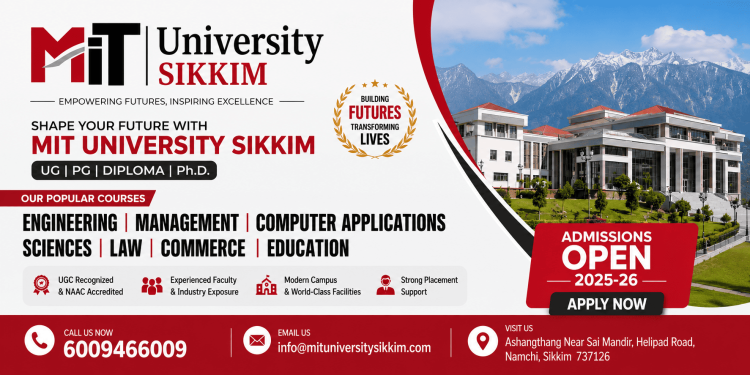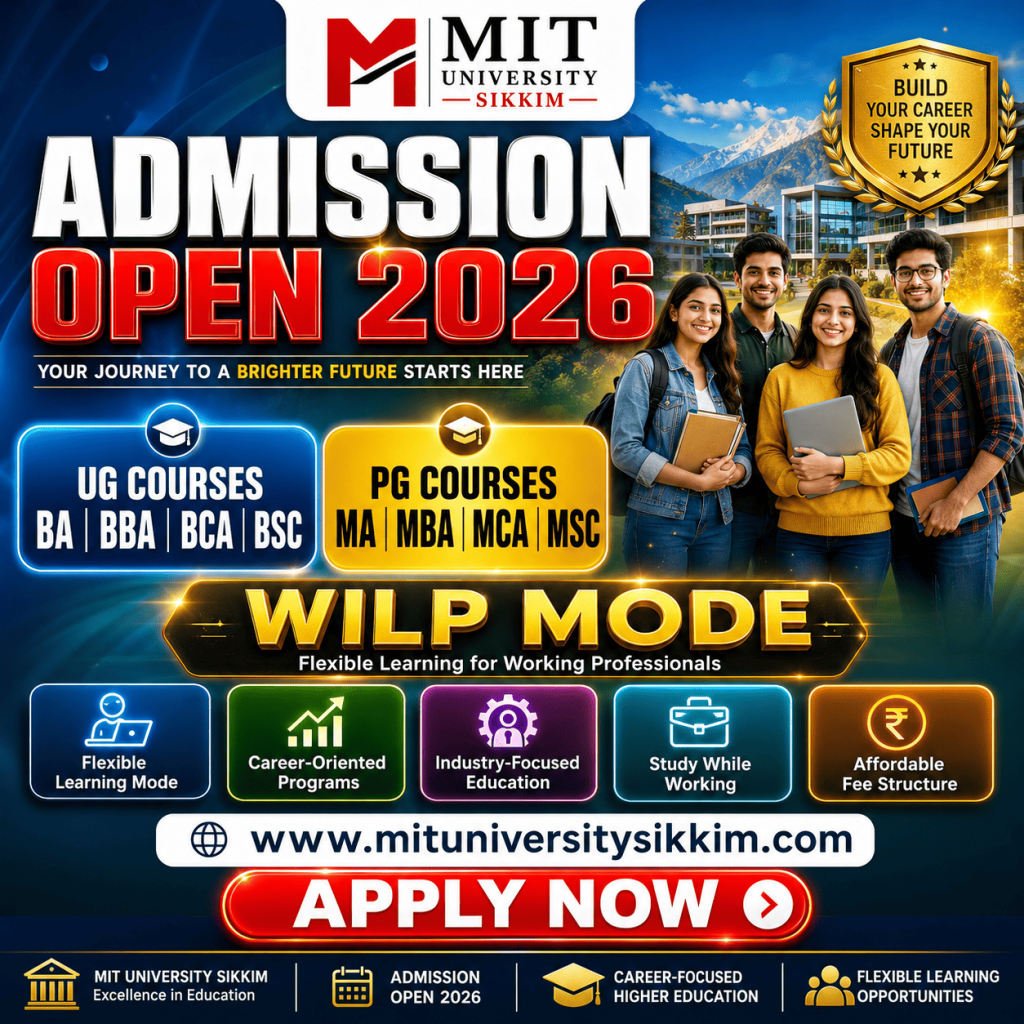
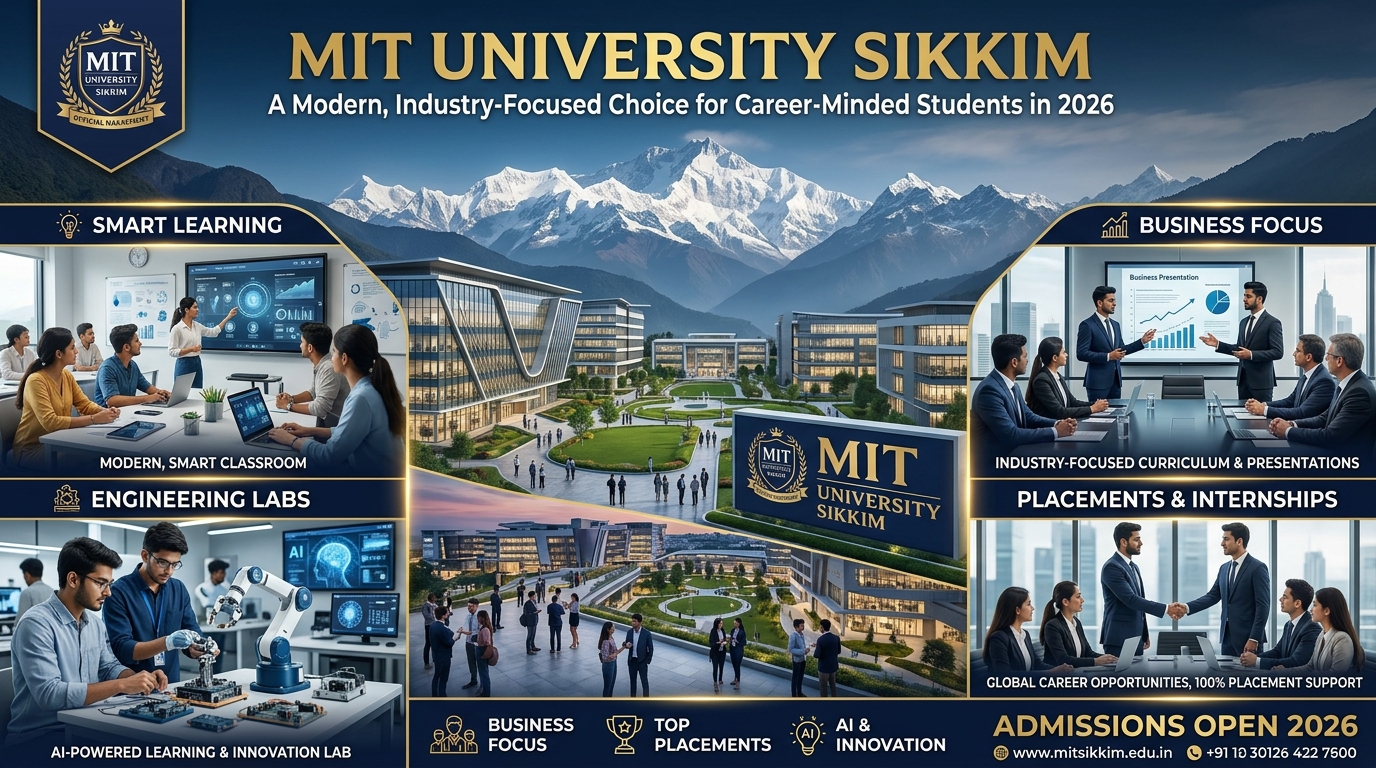
For students planning their higher education in 2026, MIT University Sikkim has become one of the more talked-about new options in eastern India. Bringing together its key features in one view helps explain why a government-approved university in the Himalayas is drawing applicants from well beyond Sikkim.
The foundation is its legal standing. The university was established by the Government of Sikkim under Sikkim State Act No. 11 of 2024 and awards UGC-recognised degrees valid across the country for higher studies, government roles, and private careers. It is promoted by the IMTS Foundation and located in Melli, in the Namchi district of South Sikkim.
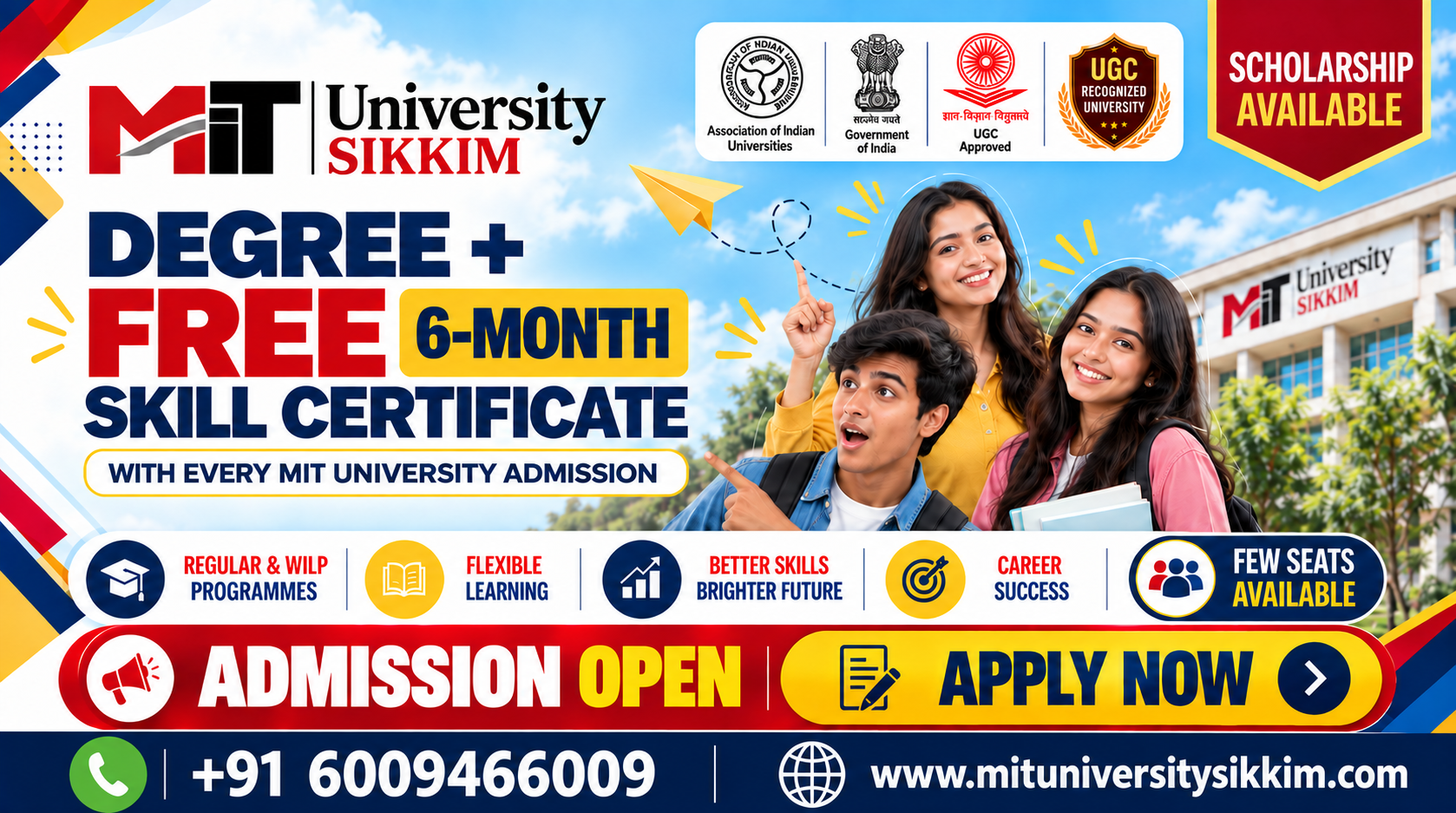
Its defining feature is the industry-integrated model. Mandatory industrial training is built into the curriculum as a core graduation requirement, not an optional internship. The university’s stated goal is for students to graduate with real project experience and a professional portfolio already in hand.
The academic structure supports this. The curriculum follows the National Education Policy 2020 and runs on a credit-based semester system, spanning faculties that include engineering, management, commerce, arts, design, law, life sciences, and more, at undergraduate, postgraduate, and doctoral levels.
Infrastructure and setting form another pillar. A modern campus in the Sikkim Himalayas offers a clean, safe, and focused environment, a sharp contrast to congested metro campuses. For many students and parents, quality of life is now part of the education decision, and Sikkim scores well on safety and natural surroundings.
Then there is the founding-batch opportunity. Joining a university in its early years means becoming part of its story, often with close faculty attention and a tight-knit student community. The 2026 intake represents exactly this kind of early-mover chance.
No new university can claim the decades-long placement history of established institutions, and prospective students should evaluate it on that honest basis. What MIT University Sikkim offers instead is a modern, recognised, industry-first education in a distinctive location, backed by formal government approval.
For career-focused students weighing their options in 2026, that is a combination worth examining closely, alongside careful checks on programme details, fees, and eligibility directly with the university.