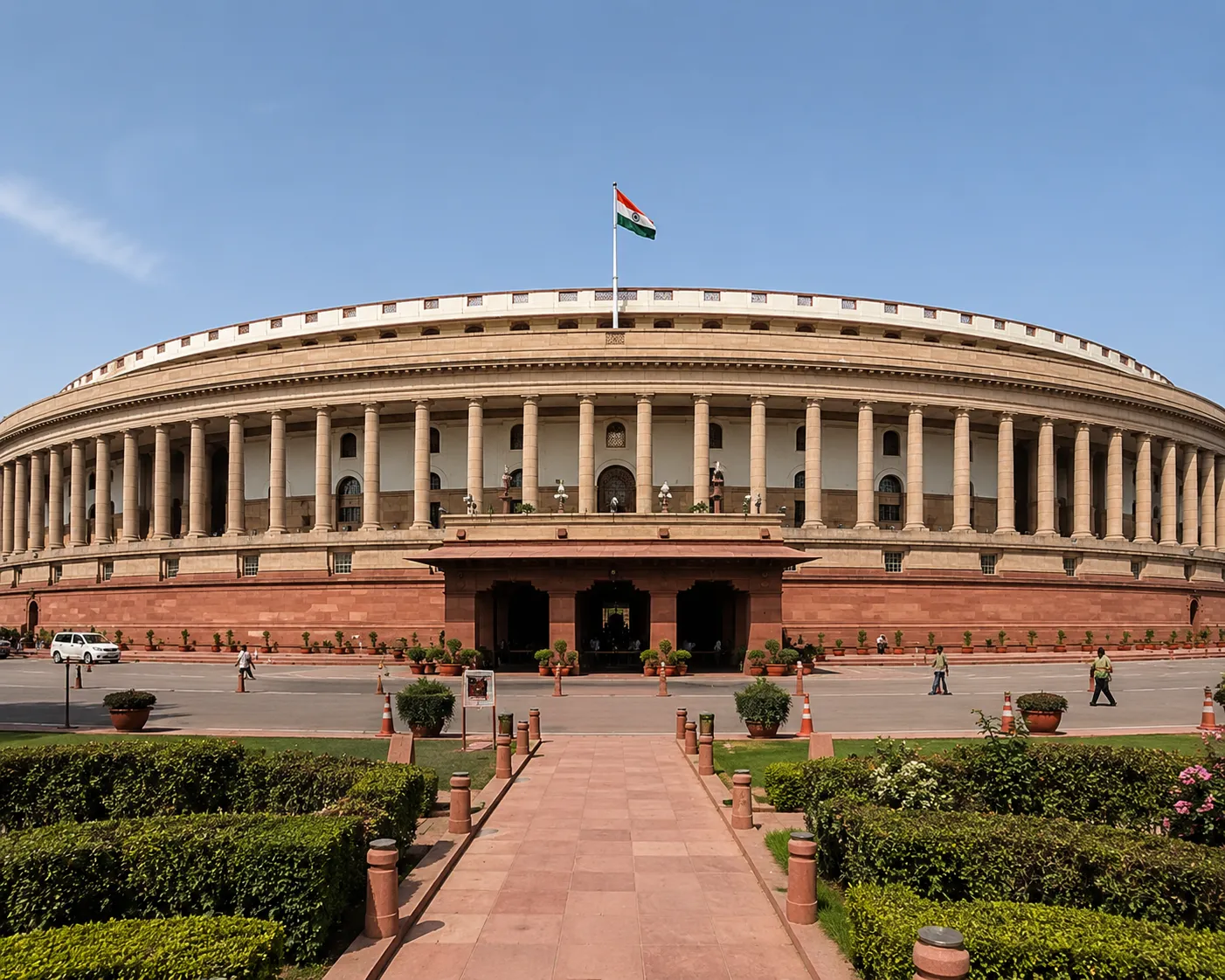
Parliamentary Panel NTA Reforms: In a sharply worded action-taken report, India’s higher education oversight body has put the National Testing Agency on notice. The Parliamentary Standing Committee on Education, Women, Children, Youth and Sports, chaired by Rajya Sabha MP Digvijaya Singh, has flagged continuing examination irregularities despite multiple government interventions, and has formally demanded a time-bound implementation roadmap for long-pending NTA reforms. This Parliamentary Panel NTA Reforms push comes at a particularly sensitive moment for India’s testing ecosystem, still reeling from the fallout of the NEET-UG 2026 paper leak controversy and subsequent re-examination.
What Exactly Did the Committee Present?
The Parliamentary Standing Committee on Education, Women, Children, Youth and Sports presented its 381st action taken report on the recommendations contained in the 364th report on Demands for Grants (2025-26) about the Department of Higher Education to Rajya Sabha Chairman CP Radhakrishnan on Tuesday.

This is not a fresh investigation — it is a formal follow-up document assessing how far the government has actually progressed on reforms it had already promised. And according to the committee, the answer is: not far enough. The panel noted that despite steps taken by the ministry — like the high-powered steering committee headed by K Radhakrishnan formed to oversee reforms — irregularities in nationwide examinations continue to take place. These often lead to cancellation of exams, causing anxiety among lakhs of students across the country.
Endorsing the Education Minister’s Own Admission
What gives this Parliamentary Panel NTA Reforms report particular weight is that it is not merely an opposition critique — it directly cites the government’s own acknowledgement of the problem. Supporting Education Minister Dharmendra Pradhan’s acknowledgment that “a lot of improvement is needed in the NTA” from June 16, 2024, the committee recommended that the National Testing Agency (NTA) hold wider consultations with stakeholders to draw a “foolproof” protocol for conducting competitive exams. The committee urged that the NTA expedite the implementation of recommendations made by the Radhakrishnan Committee.
To suggest effective measures for the transparent, smooth, and fair conduct of examinations by the National Testing Agency (NTA), the Education Ministry constituted the High-Level Committee of Experts (HLCE) on June 22, 2024, to make recommendations on reforms in the examination process, improvement in data security protocols, and the structure and functioning of NTA. HLCE submitted its report to the ministry on October 21, 2024. Nearly two years on, the Parliamentary Panel NTA Reforms demand essentially asks: where is the roadmap to actually implement what was already recommended?
The Blacklisting Loophole That Caught the Committee’s Attention
One of the most concrete and actionable findings in this round of scrutiny concerns vendor accountability. The parliamentary panel noted that several firms involved in paper setting, administration, and correction have been blacklisted by one organisation/State Government, but this is not impeding their securing of contracts from other states or organisations. “The Committee, therefore, recommends that the department compile a nationwide list of blacklisted firms to bring clarity in this regard,” the report said.
In other words, the committee has identified a glaring systemic gap — companies blacklisted by one state government or organisation often continue securing contracts elsewhere due to the absence of a centralized database. For an examination ecosystem already battered by controversy, this fragmented accountability structure represents exactly the kind of loophole that critics argue enables repeated lapses.
NTA’s Response — Core Functions Are Not Outsourced
The National Testing Agency, for its part, has pushed back on the implication that outsourced vendors are responsible for the breaches. In its action taken reply, the higher education department said that the core activities of the NTA, including paper setting and correction, are not “outsourced.” “The NTA maintains records of penalised vendors, including terminations, blacklisting, and contract cessations, and does not engage vendors that have been blacklisted by NTA itself.”
“The procurement process adopted by the NTA incorporates mandatory self-disclosure clauses regarding blacklisting of the bidder by any Government agency,” it said. Despite this defence, the Parliamentary Panel NTA Reforms committee remained unconvinced that self-disclosure alone is a sufficient safeguard, given the recurring pattern of irregularities across recent examination cycles.
A Closer Look at NTA’s Finances — Where Is the Surplus Going?
Beyond procedural reforms, the committee also turned its attention to the agency’s financial position — and found reason for concern there too. The committee also referred to the finances of the NTA and reiterated its recommendation that the agency’s surplus be utilised to strengthen its capabilities. “The Committee notes that the NTA collected an estimated Rs 3,512.98 crore while it spent Rs 3,064.77 crore on the conduct of examinations,” netting a surplus of Rs 448 crore in the last six years.
“It recommends that this corpus be used to build the agency’s capabilities to conduct tests itself, or to strengthen regulatory and monitoring capabilities for its vendors,” the report said.
In response, the higher education department said that NTA is a self-sustained organisation, which does not receive Government funding. “The income and expenditure trend of the NTA shows that, on average, Rs 74.5 crore remains every year after incurring all expenses. The income remaining unspent in a financial year is utilised for preparatory activities for the next financial year. However, any surplus after budgeting for next year’s activities can be appropriately utilised,” it said.
A Demand for Greater Accountability to Parliament Itself
The committee did not stop at procedural and financial recommendations — it also aimed for NTA’s institutional transparency toward Parliament. On accountability, the committee said the NTA had audited accounts but had not submitted annual reports to Parliament, even after being asked. The committee “strongly recommends that the NTA issue and present Annual Reports every year to Parliament.” The agency responded that its accounts were audited by the Comptroller and Auditor General and that its work was subject to parliamentary oversight already.
Why the Timing of This Report Matters
Notably, this report was uploaded on June 16 during a parliamentary recess, at a time when the Education Ministry was already facing multiple controversies, including demands related to Union Education Minister Dharmendra Pradhan’s leadership. The Parliamentary Panel NTA Reforms report therefore lands as another pressure point on an already embattled ministry, reinforcing the perception that examination governance reforms have moved too slowly despite repeated promises.
Also Read…..
JMI Admission 2026 Waiting List