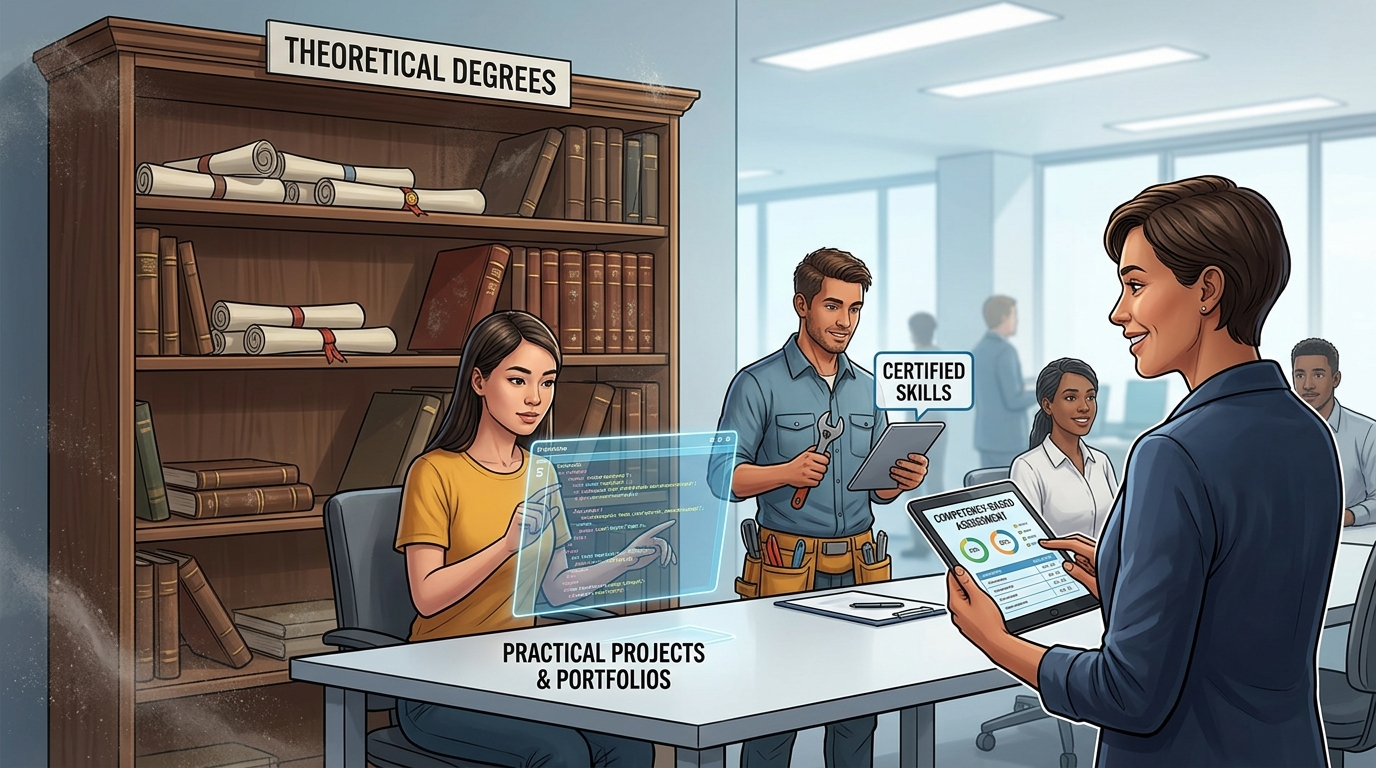
In boardrooms, interview panels, and talent acquisition meetings across India, a pattern is becoming increasingly difficult to ignore. Human resource managers the gatekeepers of employment at India’s companies are changing what they look for when they review a candidate’s academic background.
The theoretical degree, once the unchallenged currency of the hiring market, is losing its singular authority.
The Shift HR Managers Describe
Conversations with HR professionals across sectors technology, banking, manufacturing, healthcare, and retail reveal a consistent narrative. Academic scores and degree names are still noticed. But they are no longer sufficient.
“I can train someone on technical knowledge relatively quickly,” said an HR director at a financial services firm in Mumbai. “What I cannot easily train is the ability to think under pressure, manage ambiguity, and apply frameworks to real situations. Candidates who have done that during their education through live projects, applied coursework, or industry internships stand out immediately.”
This perspective, once held by a minority of progressive HR professionals, has become mainstream in 2026.
What Changed the Hiring Calculus
Several converging forces explain the shift. Automation has compressed the value of rote knowledge. Artificial intelligence tools now handle information retrieval and rule-based analysis that once required dedicated human expertise. What remains irreplaceable is human judgment, contextual intelligence, and the ability to navigate real-world complexity.
These are precisely the competencies that applied, practical education develops and that passive, theory-heavy programmes frequently do not.
The Practical Learning Advantage in Numbers
Hiring data from 2025-2026 reflects the preference shift in measurable terms. Candidates who completed degree programmes with integrated internships, live project components, and industry mentorship showed higher interview conversion rates across multiple sectors. In competitive roles where applicant volumes are high, practical exposure has become a meaningful differentiator in early screening rounds.
WILP Graduates and the Hiring Room
Work-Integrated Learning Programme graduates occupy a particularly strong position in this environment. Because WILP students apply their coursework in active professional settings throughout their degree, they arrive at interviews with demonstrated capability rather than theoretical promise.
HR professionals report that WILP candidates communicate more confidently about professional scenarios, demonstrate better problem-framing ability, and require shorter onboarding periods. In high-volume hiring environments, these qualities carry real commercial value.
The Student Challenge: Choosing the Right Programme
For students navigating their degree choices, the HR preference shift carries a direct and urgent message: the programme you choose should develop practical capability, not simply confer a credential.
Career advisors recommend evaluating programmes on criteria beyond flexibility and fee structure specifically looking for live project components, mentorship access, industry-aligned curriculum, and demonstrated employment outcomes among alumni.
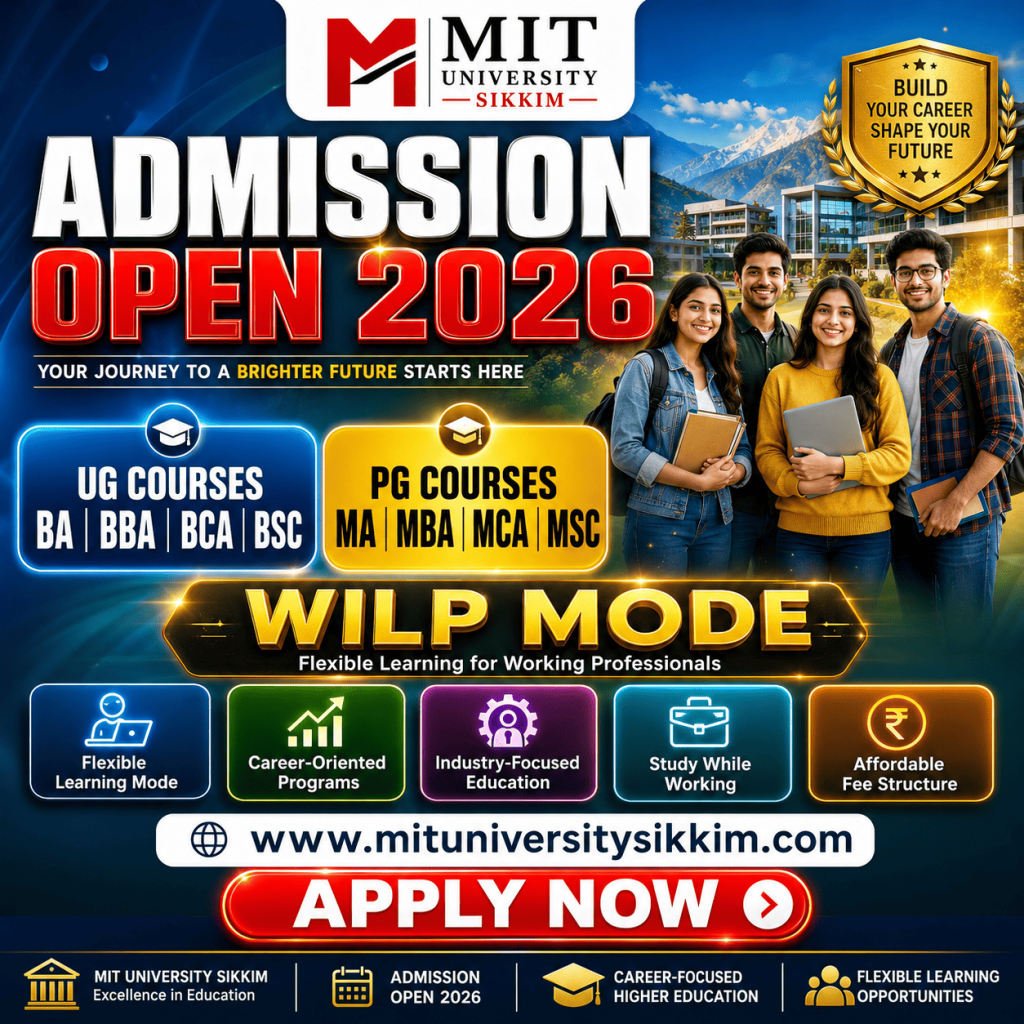
Institutions such as MIT University Sikkim have structured their programmes around these very criteria recognising that employability is not incidental to education but central to its purpose.
The Future of Hiring in India
Education analysts and HR professionals agree that the preference for practical learning will deepen over the next five years. As AI reshapes job roles and industries require continuous adaptation, the ability to learn, apply, and perform under real conditions will become the defining professional competency.
For students graduating in 2026 and beyond, that means one thing above all: the quality of your practical exposure during your degree will matter more than ever before.