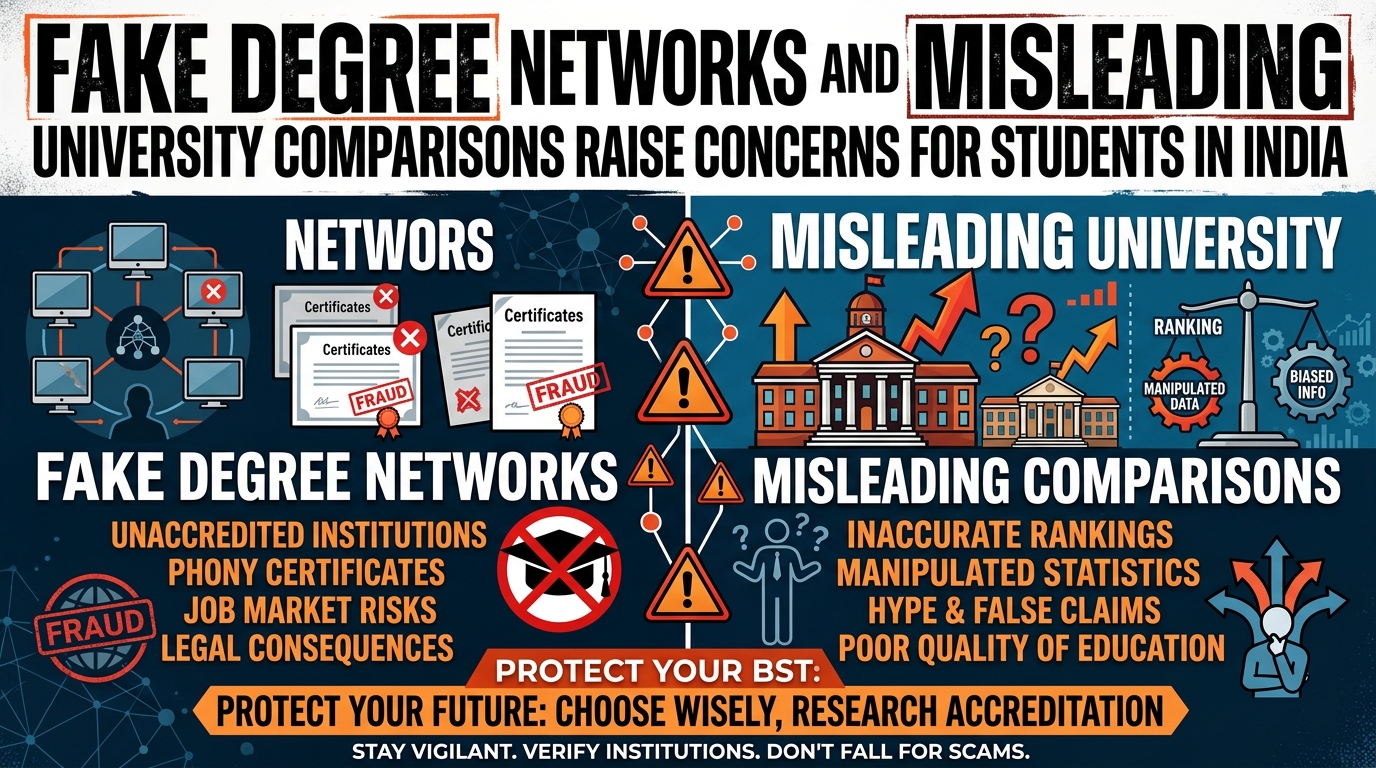
As online and distance education continues to expand across India, education experts and regulators are warning students about the growing risk of fake universities, forged degrees and misleading admission campaigns circulating on social media and unofficial education platforms.
The warning comes at a time when thousands of students are searching for flexible degree programmes, online admissions and low-cost higher education options. While digital learning has improved access to education, experts say it has also created opportunities for fraudulent operators targeting students through fake counselling services and manipulated university comparisons.
The University Grants Commission (UGC) has repeatedly published lists of institutions identified as “fake universities” operating without legal authority to award recognised degrees. Officials have advised students to verify university approvals directly through official government and regulatory websites before applying.
Concerns over misleading comparisons
Education analysts say some online platforms and advertisements compare recognized universities with unapproved institutions while highlighting promises such as “guaranteed admission”, “fast degrees” or “100% job-programmes”.
Experts warn that such campaigns can mislead students, particularly those seeking online or distance education opportunities from smaller towns and rural areas.
“Students often assume that if a university appears in online comparisons or advertisements, it must be officially recognised,” said a Delhi-based higher education consultant. “But many do not independently verify approvals or accreditation.”
Career counsellors say students are increasingly being influenced by short-form videos, paid promotions and unofficial ranking claims shared through social media platforms.
Kanpur investigation highlighted scale of problem
Concerns over fake educational documents gained attention after police investigations in Kanpur uncovered a large forged marksheet and degree racket linked to multiple educational institutions and study centres.
According to investigators, hundreds of fake academic documents, including degree certificates and migration records, were recovered during raids. Authorities said the network allegedly targeted students looking for quick admissions or shortcuts to professional qualifications.
The investigation also raised concerns about the role of unofficial agents and counselling centres operating without proper oversight.
Students urged to focus on verification
Education experts say students should carefully verify:
- UGC recognition status
- AICTE approval for technical programmes for college
- Official university notifications
- Validity for jobs and higher education
Experts also advise students to avoid institutions or agents promising:
- Degrees without examinations
- One-year graduation programmes
- Backdated certificates
- Direct admission without eligibility checks
Growing need for awareness
Higher education researchers believe the rapid growth of online education has made awareness and verification more important than ever.
They say students should prioritise recognised institutions, transparent admission processes and practical skill development rather than depending only on advertising claims or online comparisons.
Experts warn that an invalid or unrecognised degree can create long-term difficulties during employment verification, government recruitment and higher education admissions, affecting students years after completing a course.