India’s engineering education system is once again under scrutiny as concerns over an outdated engineering curriculum continue to grow. Despite earning Bachelor of Technology (BTech) degrees from reputed institutions, many students are finding themselves ill-equipped for the demands of modern industries, prompting them to spend additional time and money on external courses, certifications, and skill-development programmes.
Experts, students, and recruiters have increasingly highlighted the widening gap between what is taught in engineering colleges and the skills required in today’s rapidly evolving job market. As technologies such as artificial intelligence, machine learning, cloud computing, and cybersecurity transform industries, many graduates say that classroom learning alone is no longer sufficient to secure employment.
Students Turning to Paid Courses for Employability
The issue of an outdated engineering curriculum has pushed thousands of students towards private training institutes and online learning platforms. Many engineering graduates are investing in specialised courses to acquire practical skills that employers expect.
Students pursuing BTech degrees often spend additional amounts on coding boot camps, software certifications, and internship programmes to remain competitive. According to industry observers, these expenses add to the financial burden already associated with higher education.
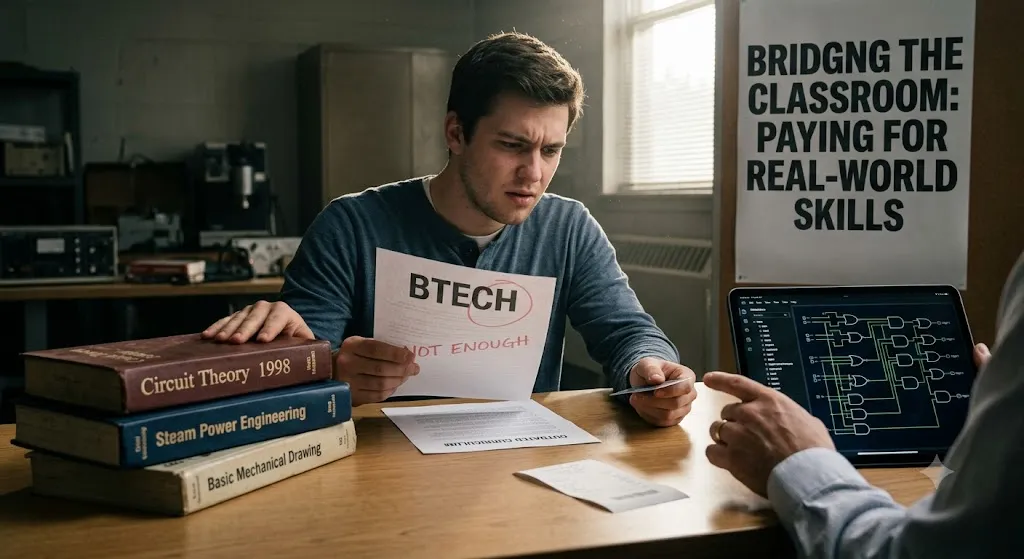
Several students have expressed concerns that while universities focus heavily on theoretical concepts, there is limited emphasis on practical applications, emerging technologies, and industry-based projects. As a result, graduates frequently require additional training after completing their degrees.
Industry Expectations Have Changed Rapidly
The growing debate around the outdated engineering curriculum comes at a time when employers are prioritising skills over academic credentials. Companies increasingly seek candidates with expertise in data analytics, generative AI, full-stack development, robotics, cloud technologies and problem-solving abilities.
Recruiters point out that technological advancements are occurring much faster than curriculum revisions in many universities. By the time syllabi are updated, some of the content has already become obsolete.
Industry leaders believe that stronger collaboration between academic institutions and companies is essential to ensure that engineering graduates are prepared for current and future workplace requirements.
Skill Gap Remains a Major Challenge
India produces hundreds of thousands of engineering graduates every year. However, employability remains a concern due to the persistent gap created by the outdated engineering curriculum.
Education experts argue that traditional teaching methods, examination patterns, and rigid academic structures have limited students’ exposure to real-world challenges. Many institutions still rely on decades-old course structures that fail to incorporate the latest technological developments.
As industries adopt automation, digital transformation, and artificial intelligence, students are increasingly expected to possess practical knowledge, communication skills, and hands-on experience alongside theoretical understanding.
Calls for Curriculum Reforms Intensify
The concerns surrounding the outdated engineering curriculum have reignited discussions on the need for comprehensive reforms in technical education. Academicians and policymakers have called for more flexible and industry-oriented programmes.
Experts recommend:
- Regular updates to engineering syllabi.
- Greater emphasis on project-based learning.
- Integration of emerging technologies into coursework.
- Stronger partnerships between colleges and industry.
- Mandatory internships and experiential learning opportunities.
- Increased focus on entrepreneurship and innovation.
Such measures, they argue, can help bridge the gap between academic education and industry expectations.
Online Learning Platforms Filling the Gap
With engineering colleges struggling to keep pace with changing technologies, online education platforms have emerged as important supplementary resources. Students are increasingly relying on digital learning tools, certification programmes and professional communities to enhance their employability.
The rise of artificial intelligence and automation has further accelerated the demand for continuous learning. Industry experts stress that lifelong learning is becoming essential for engineers to remain relevant in an increasingly competitive environment.
Need for Future-Ready Engineering Education
The debate over the outdated engineering curriculum reflects broader concerns about the future of technical education in India. While a BTech degree continues to hold value, many students believe it is no longer sufficient on its own to meet industry expectations.
As employers place greater emphasis on practical expertise and evolving technologies, education stakeholders are being urged to modernise engineering programmes and make them more responsive to market demands.