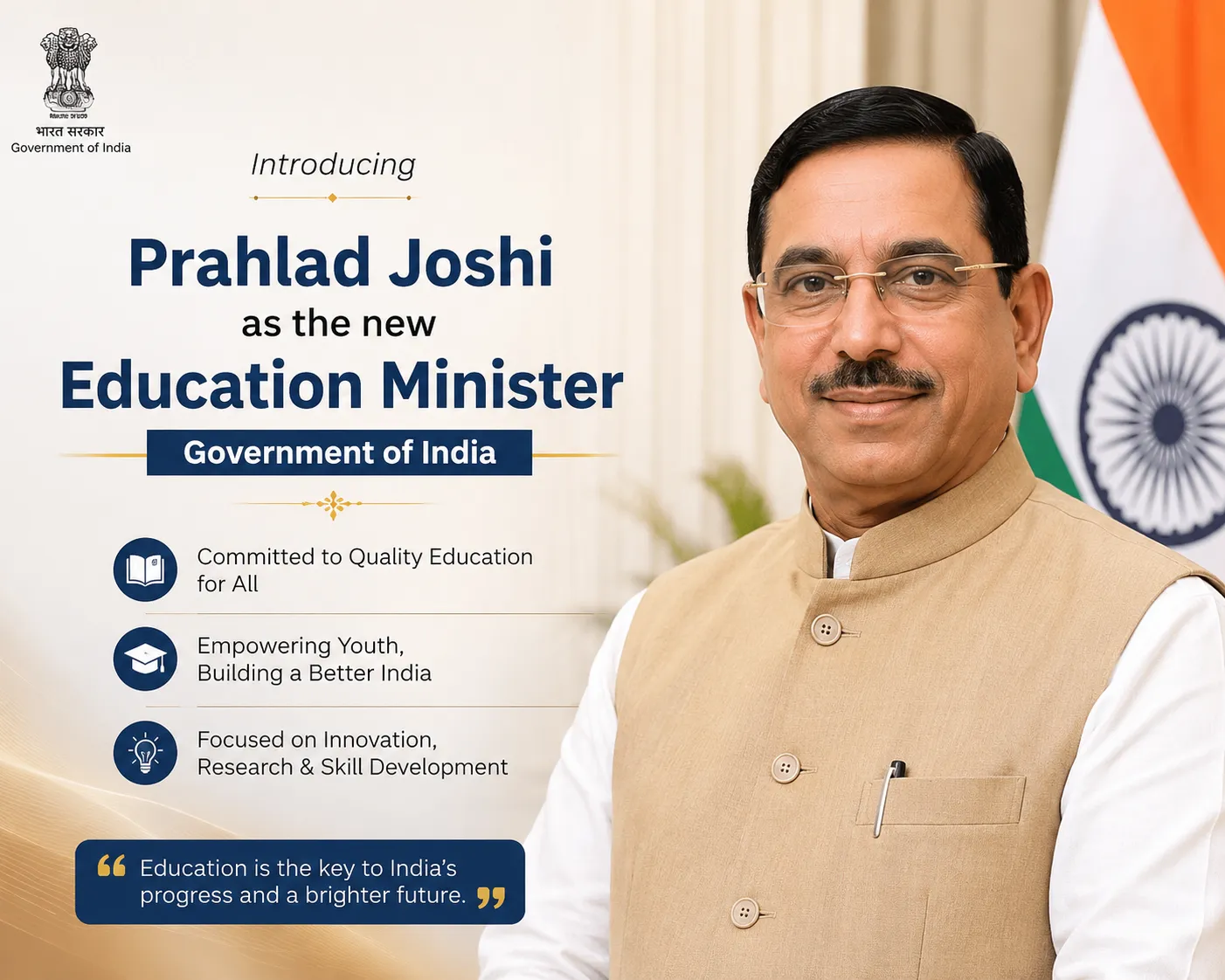
Following days of widespread student demonstrations across the nation over the NEET-UG examination paper leak controversy, Dharmendra Pradhan submitted his resignation to Prime Minister Narendra Modi on 25 July 2026, resulting in senior cabinet leader Pralhad Joshi being appointed as the new Union Education Minister on 25 July 2026.
The sudden leadership transition comes in the wake of escalating protests at Jantar Mantar and elsewhere, where millions of young aspirants demanded accountability and sweeping institutional reforms. Taking charge of his new office at Kartavya Bhavan on 26 July 2026, Joshi now steps into one of the most high-stakes portfolios in the cabinet while retaining his existing responsibilities in Consumer Affairs, Food and Public Distribution, as well as New and Renewable Energy.

Why Union Education Minister Dharmendra Pradhan Stepped Down
The resignation followed weeks of intense public scrutiny after major irregularities were uncovered in the national competitive medical examination. In his official resignation letter, Pradhan noted that he chose to step aside in the interest of the country’s youth to prevent the political standoff from escalating further.
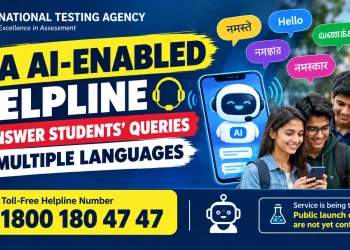
During his tenure, the ministry had handed the probe over to the Central Bureau of Investigation (CBI), canceled affected tests, and announced that future entrance exams would shift entirely to Computer-Based Test (CBT) mode to curb security breaches. However, persistent public pressure and mounting political friction ultimately led to his departure.
Strategic Shift and Key Priorities for the New Ministry
With Pralhad Joshi assuming leadership, the primary focus of the government turns toward restoring absolute transparency and trust in India’s higher education system. Joshi, a seasoned parliamentarian who previously served as the Union Minister for Parliamentary Affairs and Coal, brings administrative experience to a ministry facing immediate operational hurdles.
Key challenges awaiting the newly appointed minister include:
-
Overhauling Exam Security: Overseeing the complete transition of major national entrance examinations to secure, computerized formats.
-
Rebuilding Student Confidence: Addressing systemic vulnerabilities within testing agencies to ensure fair evaluation for over two million students.
-
National Education Policy (NEP) Rollout: Continuing the nationwide implementation of structural curriculum reforms across primary and higher education tiers.