The Union Public Service Commission conducted the UPSC Civil Services Preliminary Examination 2026 on May 24, 2026. With the exam now completed, lakhs of IAS aspirants are waiting for the result that will determine who moves to the next stage of the most competitive government exam in India.
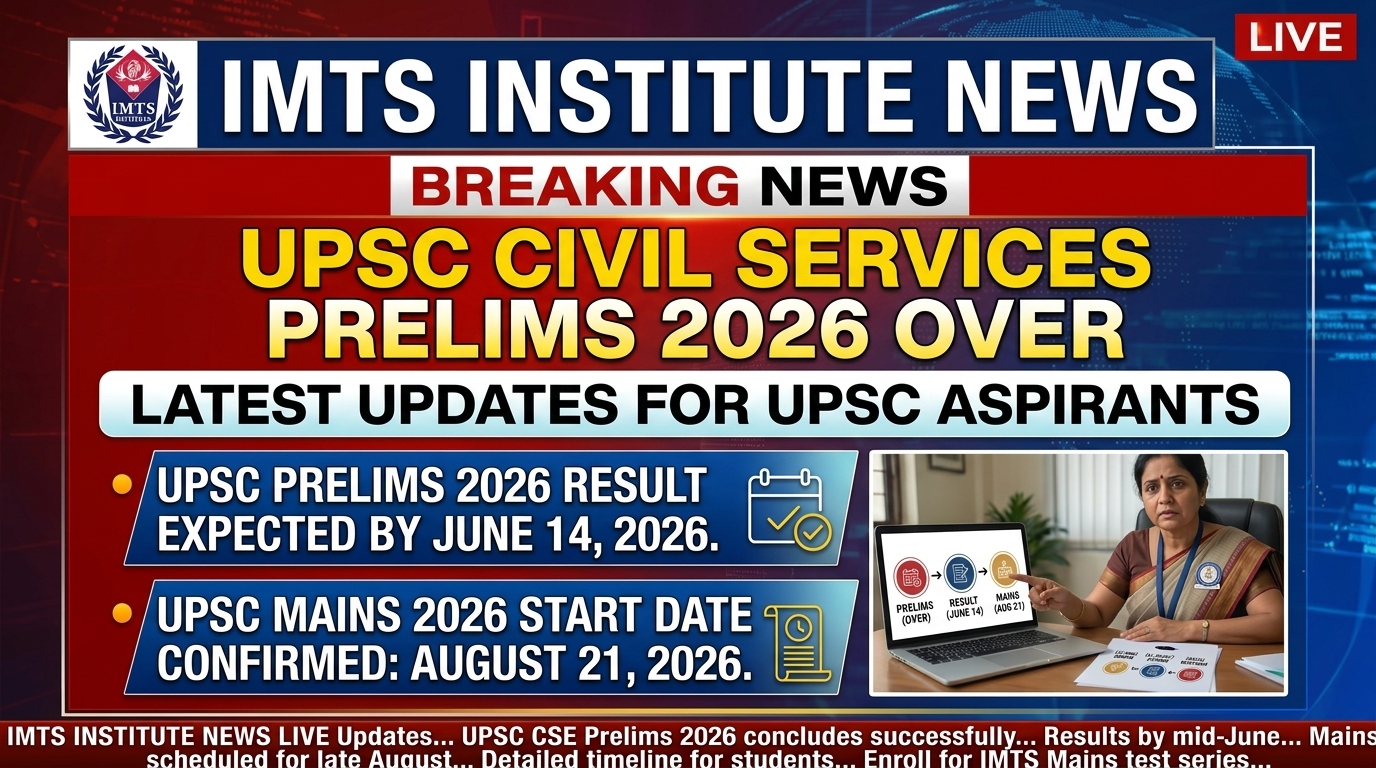
Based on the commission’s record over the past four years, the UPSC Prelims 2026 result is expected between June 7 and June 14, 2026. The result will be published at upsc.gov.in as a PDF containing the roll numbers of qualifying candidates.

UPSC Introduces Provisional Answer Key
In a significant development this year, UPSC released a provisional answer key for the CSE Prelims 2026 after the exam. An objection window was open until approximately May 31, giving candidates a formal opportunity to challenge answers they believed were incorrect. Education experts have called this a welcome move that brings greater transparency to the IAS selection process.
UPSC CSE 2026 Important Dates
- Prelims held: May 24, 2026
- Prelims result expected: June 7 to June 14, 2026
- UPSC Mains 2026: August 21, 2026 (runs for 5 days)
- Personality Tests (Interviews): January to February 2027
- Final result expected: April to May 2027
- Total vacancies announced: Approximately 933 posts across IAS, IPS, IFS, and other Central Services
Why Candidates Should Start Mains Preparation Now
The gap between the Prelims result and the Mains examination is very short. Once the result comes out, candidates will also need to fill the Detailed Application Form (DAF) within a few days. There is simply no time to waste.
The UPSC Mains 2026 consists of nine papers. Two of these are qualifying papers in Indian Language and English worth 300 marks each. The remaining seven papers, including four General Studies papers, one Essay paper, and two Optional Subject papers, are counted toward the final merit list. Each merit-counted paper is worth 250 marks, making the total 1,750 marks for the final ranking.
Candidates who have appeared should focus especially on GS Paper II (Governance, Polity, International Relations), GS Paper III (Economy, Environment, Science and Technology), and Essay writing, which are areas where disciplined preparation can significantly improve rankings.